
Your Cart is Empty
$50 OFF ORDERS OF $450 OR MORE -- CODE: 50OFF450
$50 OFF ORDERS OF $450 OR MORE -- CODE: 50OFF450


MK7 GTI & Golf R / Gen 3 EA888
Two different approaches to charge-air cooling on the MQB platform. One clear answer depending on where your build is headed.
Quick Answer
For most MK7 GTI and Golf R builds running a stock IS20, IS38, or mildly upgraded turbo, the ARM MK7 FMIC Kit is the correct choice. It reduces intake air temperatures by 74%, delivers up to 24whp and 26wtq, and installs bolt-on in 2 to 3 hours with no cutting or drilling. The ARM MK7 Bi-Cooler Piping Upgrade is designed for builds running an upgraded turbo, where the additional thermal load from elevated boost and airflow exceeds what a single FMIC can fully manage. It combines the ARM FMIC with the stock-location intercooler in series for maximum dual-core cooling capacity.
If you own a MK7 GTI or Golf R and you are looking into intercooler upgrades, this question comes up constantly on every forum and in every build thread: standalone FMIC or Bi-Cooler? The problem is that most answers assume you already know the difference between the two setups and how each one works on the Gen 3 EA888.
This post explains both setups in full, covers the real data behind ARM's MK7 intercooler testing, and gives you a straightforward answer based on your turbo and build level.
The moment you add a tune to your MK7, the game changes for your charge-air cooling system. A tune increases boost pressure by pushing the IS20 or IS38 turbo to spin faster and sustain that speed longer. The faster a turbo spins to build boost, the hotter the compressed air charge becomes before it even reaches your intake manifold.
Your MK7's ECU monitors intake air temperatures (IAT) constantly. Once those temperatures climb beyond a threshold, the ECU pulls ignition timing and caps power output to protect the engine. There is no warning light. The power just decreases, and your dyno sheet never reflects what the tune was actually capable of producing.
ARM's own MK7 testing documented exactly this problem. On the stock OEM intercooler, intake air temperatures climbed 61 degrees above ambient during a back-to-back 2nd through 5th gear pull on a 79-degree day. With the ARM MK7 FMIC installed on a similar 70-degree day, that same pull produced IATs only 16 degrees above ambient. That is a 45-degree swing, and the difference between your ECU working with your tune versus quietly fighting it every time you get into boost.
This is also the reason most professional tuners on the MQB platform require an upgraded intercooler before they will flash anything above a basic Stage 1 map. The stock intercooler was engineered for OEM thermal loads, not sustained tuned driving.

ARM MK7 FMIC data log: 16° above ambient vs. 61° above ambient on the OEM intercooler under similar conditions.
A front-mount intercooler moves the intercooler core from its OEM stock-location position to the front of the radiator stack. This matters because the air reaching the core before it passes through the radiator is significantly cooler than the air behind it. The FMIC gets first access to the coldest available ambient air, which is exactly where you want your charge-air cooling to happen.
A common misconception is that a bigger intercooler is always more effective. On the MQB platform, that is not the case. A larger core requires more charge volume to fill before boost pressure builds at the manifold. More volume means more potential for pressure drop and turbo lag. ARM's philosophy on the MK7 platform is to use the most efficient core possible in the best possible position, rather than the largest core available.
The ARM MK7 FMIC core is only 28% larger than the OEM unit in raw volume, yet it outperforms stock-location intercoolers that are nearly twice the size. Position and fin density do more work than cubic inches on this platform.
ARM Product

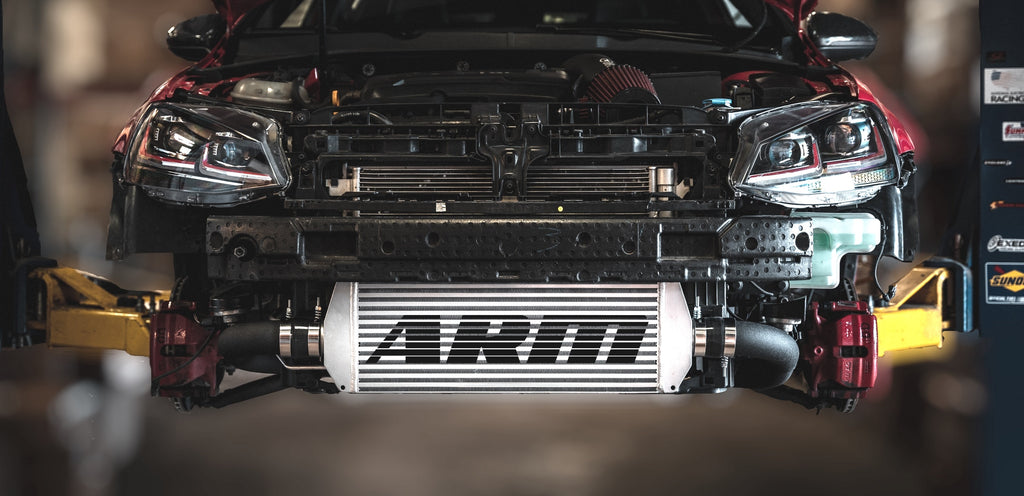
The ARM MK7 FMIC Kit reduces intake air temperatures by 74% compared to the OEM intercooler, delivering up to 24whp and 26wtq on the Gen 3 EA888. At 644 cubic inches with 20 fins per inch and a 700hp efficiency rating, it handles everything from a street IS20 Stage 1 build to a full big-turbo setup without needing an upgrade.
Installation requires bumper removal, as every MK7 intercooler upgrade does, but that is where the complexity ends. Unlike stock-location swaps, the ARM FMIC requires no crash bar disassembly, no coolant drain, and no cutting or drilling. ARM includes dedicated MK7 mounting brackets that bolt in without modification. Most installs are complete in 2 to 3 hours.
| Spec | ARM MK7 FMIC Kit |
|---|---|
| Core Size | 22 x 9 x 3.25 in. |
| Total Volume | 644 cu. in. |
| Fin Density | 20 fins per inch |
| Power Rating | 700hp |
| IAT Reduction | 74% vs. OEM |
| Installation | 100% bolt-on, no cutting or drilling |
| ACC Compatibility | Fits emblem-mount ACC only (not lower bumper ACC) |
The ARM MK7 Bi-Cooler Piping Upgrade is not a replacement for the FMIC. It is an addition to it. The Bi-Cooler upgrade adds a custom piping configuration that allows the ARM MK7 FMIC to run simultaneously with your OEM intercooler (or any upgraded stock-location unit that fits the factory charge piping). The charge air passes through both intercoolers in sequence before reaching the intake manifold, giving it two separate cooling opportunities.

The result is a larger total cooling volume and greater heat dissipation capacity than either intercooler can achieve on its own. This is the ceiling of what the MK7 cooling system can support, and it is specifically designed for builds where that ceiling is needed.
There is one important consideration: the Bi-Cooler setup introduces a slight amount of additional pressure drop because the charge air travels through two cores and a longer piping path. On a stock IS20 or IS38, this pressure drop can partially offset the cooling advantage. This is why ARM recommends the Bi-Cooler specifically for builds running an upgraded turbocharger, where the increased airflow capacity more than compensates for any additional system resistance.
ARM Product
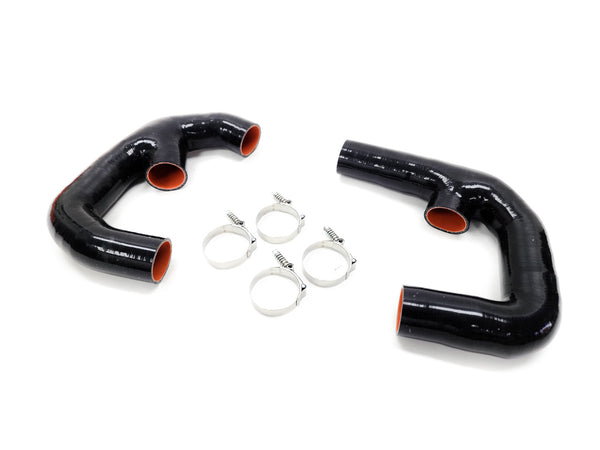
The ARM MK7 Bi-Cooler Piping Upgrade pairs with the ARM MK7 FMIC Kit to create a complete dual-intercooler cooling system. It is compatible with the OEM intercooler or any upgraded stock-location unit that fits the factory charge pipe routing. This is the maximum charge-air cooling solution available for the MK7 platform, and it is built for builds where the thermal load from an upgraded turbo has moved beyond what a single FMIC can handle on its own.
| Detail | ARM MK7 Bi-Cooler |
|---|---|
| Setup Type | Dual intercooler (FMIC + stock-location in series) |
| Requires ARM MK7 FMIC Kit | Yes |
| Stock-Location Compatibility | OEM or upgraded (factory piping routing required) |
| Recommended For | Upgraded turbo builds |
| Factor | Standalone FMIC | Bi-Cooler Setup |
|---|---|---|
| Cooling Capacity | Single core, highly efficient front-mount positioning | Dual core, maximum total cooling volume |
| Pressure Drop | Minimal | Slightly higher (two cores + longer piping path) |
| Best Turbo Match | IS20, IS38, mildly upgraded | Upgraded big-turbo builds |
| Install Complexity | 2 to 3 hours, full bolt-on | Moderate additional piping work |
| IAT Reduction | 74% vs. OEM (ARM tested) | Maximum possible for the platform |
| Power Gain | Up to 24whp / 26wtq | Varies by turbo and tune |
The Most Common MK7 Intercooler Mistake
A larger intercooler core requires more charge volume to fill before boost pressure can build at the manifold. On the MK7 platform, that means more turbo lag and greater pressure drop. ARM's 644 cubic inch core, positioned in front of the radiator where ambient air is coldest, outperforms stock-location intercoolers nearly twice its size. It is only 28% larger than the OEM unit by volume, yet it cuts IATs by 74%. Position and fin density matter far more than raw core size on the MQB platform.
The decision comes down to one question: what turbo is your MK7 running?
The ARM MK7 FMIC Kit is the right call. It is what the vast majority of MK7 owners need: a proven 74% IAT reduction, a 700hp-rated core that gives you room to grow, and a clean bolt-on installation that does not require any modification to your crash bar, radiator stack, or OEM coolant system. The standalone FMIC delivers the best dollar-per-degree-of-cooling value on the platform and is more than sufficient for IS20 and IS38 builds running any fuel type.
Shop the ARM MK7 FMIC Kit — $547Go Bi-Cooler. At the airflow rates an upgraded turbo produces, the thermal load climbs beyond what a single FMIC can fully absorb on sustained back-to-back pulls. The Bi-Cooler setup routes your charge air through the ARM FMIC and your stock-location intercooler in sequence, giving you dual-core cooling capacity and the maximum IAT headroom the platform can support. The slight pressure drop from the dual-core path is easily absorbed by an upgraded turbo's increased flow capacity. Start with the ARM MK7 FMIC Kit and add the Bi-Cooler Piping Upgrade to complete the system.
Shop the ARM MK7 Bi-Cooler UpgradeThe ARM MK7 FMIC Kit does not fit MK7s with Adaptive Cruise Control mounted in the lower bumper position. It is compatible with vehicles that have ACC mounted in the VW emblem location. If you are unsure which configuration your vehicle has, contact us before ordering.
It is technically possible but not recommended. The additional pressure drop from routing charge air through two cores in series can work against the IS20 and IS38's efficiency, partially offsetting the cooling benefit. For stock-turbo builds, the standalone ARM FMIC Kit produces better real-world results. Save the Bi-Cooler for when an upgraded turbo is installed.
Yes, bumper removal is required on all MK7 intercooler upgrades, whether front-mount or stock-location. The ARM FMIC installation does not require crash bar removal, coolant draining, or any cutting or drilling. ARM includes all MK7-specific mounting hardware, and most installs finish in 2 to 3 hours.
A stock-location upgrade replaces the OEM intercooler with a larger core in the same factory position behind the front bumper. An FMIC relocates the intercooler entirely in front of the radiator stack, where it receives cooler pre-radiator ambient air. ARM's testing data shows the MK7 FMIC, at only 28% larger than the OEM unit by volume, outperforms stock-location intercoolers nearly twice its physical size because of this positioning advantage.
In most cases, no. The ARM FMIC is a hardware upgrade that improves the thermal environment for your existing tune. Most tunes will benefit from lower IATs without any modification. However, if you plan to combine the FMIC with a fuel upgrade (such as adding E85) or a turbo upgrade, a retune is recommended to take full advantage of the thermal headroom you have gained.
The ARM MK7 FMIC Kit fits the Volkswagen Golf VII GTI Hatchback (2.0T Gen 3), Golf VII GTI Sportwagen (1.8T Gen 3), Golf VII R Hatchback (2.0T Gen 3), Golf VII TSI Hatchback (1.4L), and Golf VII Facelift Hatchback (2.0T Gen 3). Note that vehicles with lower-bumper ACC are not compatible.
Every ARM Motorsports product is backed by a Lifetime Warranty issued automatically at the time of purchase. The warranty covers defects in craftsmanship and fitment and entitles you to a replacement unit at no cost.
ARM Motorsports
ARM MK7 intercooler kits ship free in the continental US, leave the same business day you order, and carry a Lifetime Warranty on every component. Questions about your specific build? Call us.
Call 213-434-7361 | Free US Shipping | Same-Day Shipping | Lifetime Warranty
The ARM Team
| Item | Price | Qty | Total | |
|---|---|---|---|---|
| Subtotal |
$0.00 |
|||
| Shipping | ||||
| Total | ||||
